
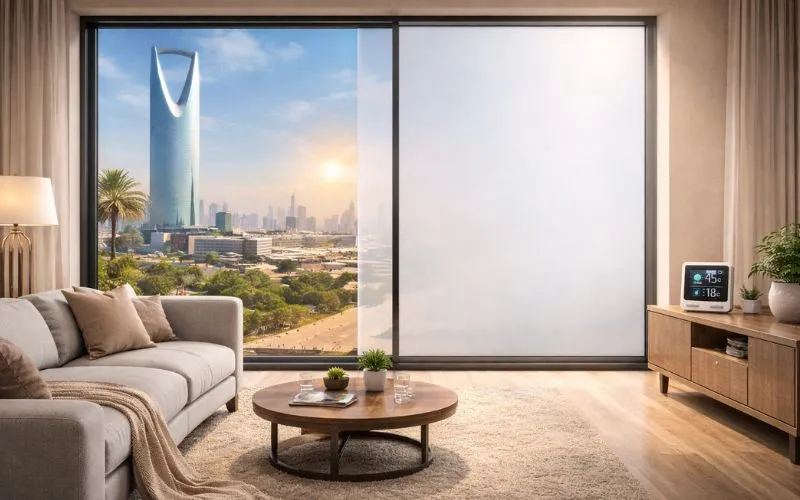
Saudi Arabia’s extreme climate poses unique challenges for building materials and window solutions. With summer temperatures regularly exceeding 45°C, intense year-round sunlight, and minimal cloud cover, any window treatment must withstand conditions that would quickly degrade inferior products. Smart film technology might seem delicate, a thin layer applied to glass, but its performance in harsh environments tells a different story.
Many property owners hesitate to invest in smart film, questioning whether it can truly handle the relentless Saudi sun and scorching heat. Unlike conventional options such as window tint, smart film offers dynamic switching between privacy and clarity without compromising on heat performance. Concerns about functionality, longevity, and actual climate performance are valid when considering any premium solution. The answer requires examining not just marketing claims but real-world performance data and understanding how PDLC technology responds to extreme conditions. Let’s address whether smart film truly suits Saudi Arabia’s demanding climate.
Thinking about smart film for your Saudi property? Get expert advice tailored to your space and climate needs.
Understanding Saudi Arabia’s Climate Challenges
Before evaluating smart film’s suitability, recognizing the specific environmental factors that affect window treatments in the kingdom provides essential context for performance expectations.
Extreme Temperature Conditions
Saudi Arabia experiences some of the world’s highest sustained temperatures. Summer months see daily highs between 40–50°C in most regions, with even higher temperatures in desert areas. Indoor-outdoor temperature differentials can exceed 25°C when air conditioning maintains comfortable interior conditions. This creates substantial thermal stress on windows and any applied treatments as materials expand and contract repeatedly throughout daily cycles.
Winter temperatures, while milder than summer extremes, still present challenges. Nighttime lows can drop to 10–15°C in some regions, creating temperature swings of 20–30°C within 24-hour periods. Window treatments must maintain integrity and functionality across this temperature range without warping, peeling, or degrading.
Intense Solar Radiation
The kingdom receives among the world’s highest solar radiation levels due to its geographical location and minimal cloud cover. UV radiation is particularly intense, causing rapid fading and deterioration of materials not specifically designed for such exposure. Standard window films and treatments designed for temperate climates often fail prematurely when installed in Saudi Arabia, losing clarity, adhesion, or functionality within months rather than years.
Direct sunlight striking windows also creates significant heat gain that overwhelms air conditioning systems and drives energy costs upward. Managing this solar heat gain while maintaining natural light becomes crucial for comfortable, efficient buildings throughout the kingdom.
How Smart Film Handles Extreme Heat
Smart film technology incorporates specific features that address Saudi Arabia’s thermal challenges, making it surprisingly well-suited to conditions that defeat many conventional solutions.
Temperature Tolerance and Stability
Premium PDLC smart film maintains full functionality across temperature ranges far exceeding what Saudi Arabia experiences. Quality films operate reliably from -20°C to +80°C, well beyond the actual conditions encountered on Saudi windows. This wide operating range ensures the liquid crystal technology continues switching between frosted glass and clear states regardless of ambient temperature or direct sun exposure.
The film’s polymer layers are engineered to resist thermal degradation. Unlike plastic blinds that warp or metal treatments that conduct excessive heat, smart film remains dimensionally stable. It doesn’t bubble, peel, or separate from glass even when windows reach elevated temperatures under direct afternoon sun. This stability comes from advanced polymer chemistry specifically formulated for extreme climate performance.
Heat Rejection Technology
Beyond simply tolerating heat, quality smart film actively reduces thermal transfer through windows. Advanced films incorporate heat-blocking technology that reflects infrared radiation while allowing visible light transmission. This selective filtering prevents solar heat from entering buildings while maintaining natural illumination and views when the film is in its clear state.
The heat rejection capabilities remain constant regardless of whether the film operates in frosted or transparent mode. Even when switched to full clarity for unobstructed views, the UV and infrared blocking properties continue working, providing consistent thermal performance throughout the day. This differs fundamentally from blinds, which only block heat when fully closed and simultaneously eliminate natural light.
Energy efficiency improvements from smart film installation often exceed 30% reduction in cooling loads for south and west-facing windows, the most challenging exposures in Saudi properties. Lower cooling demands translate directly to reduced electricity consumption, a significant consideration given the kingdom’s heavy reliance on air conditioning throughout most of the year.
UV Protection and Durability
Long-term performance in Saudi Arabia’s punishing sunlight requires more than just heat tolerance. UV resistance determines whether smart film maintains functionality and appearance over years rather than months.
Superior UV Blocking
Premium smart film provides exceptional UV protection, blocking up to 99% of harmful ultraviolet radiation. This protection operates continuously regardless of film state, safeguarding interior furnishings, artwork, and flooring from the fading and deterioration that plague Saudi properties with inadequate window treatments. The UV blocking prevents damage to the film itself as well, ensuring the polymer layers don’t yellow, crack, or lose transparency over time.
This UV protection directly addresses one of Saudi Arabia’s most challenging climate factors. The intense, year-round solar radiation that destroys conventional window treatments has minimal effect on properly engineered smart film, allowing it to maintain performance specifications throughout its rated lifespan.
Proven Longevity in Harsh Climates
Quality smart film is designed and tested for durability exceeding a decade of continuous use, even in extreme conditions. The sealed construction protects electronic components from moisture and dust, both concerns in Saudi environments where humidity varies seasonally and airborne particles are common. Unlike mechanical systems with moving parts that wear from heat, dust, and repeated operation, smart film has no components that degrade through use.
The adhesive systems used in premium films are specifically formulated for long-term bonding under temperature extremes. They maintain secure attachment to glass without bubbling, peeling, or losing adhesion even as windows undergo daily thermal cycling. This reliable bonding ensures the film continues performing as designed rather than requiring premature replacement or repairs.
Practical Performance in Saudi Applications
Understanding theoretical capabilities matters less than real-world results. Smart film’s actual performance in Saudi homes and businesses demonstrates its climate suitability conclusively.
Residential Applications
Saudi homeowners installing smart film consistently report excellent performance across the kingdom’s diverse regions. Privacy control without sacrificing natural light proves particularly valuable in residential settings where maintaining bright interiors while ensuring family privacy matters greatly. Master bedroom and bathroom applications benefit from instant privacy without the light-blocking compromise that blinds or curtains require.
Energy savings become immediately apparent in electricity bills, particularly for properties with significant west-facing glass exposure. The combination of heat rejection and maintained natural light reduces both cooling costs and artificial lighting needs. Homeowners appreciate that, unlike blinds requiring regular cleaning and maintenance, smart film needs only occasional wiping, a significant advantage in dusty conditions.
Commercial Success Stories
Hotels, offices, and shopping malls throughout Saudi Arabia demonstrate smart film’s commercial viability in extreme climates. Clinics and conference rooms equipped with smart film maintain comfortable temperatures while providing instant privacy where it matters most. The professional appearance and modern functionality align with contemporary Saudi business environments, emphasising technology and efficiency.
Corporate properties benefit from smart film’s contribution to green building initiatives and LEED certification goals. The measurable energy savings and reduced environmental impact support sustainability objectives increasingly important in Saudi commercial development. Installation in high-profile projects across the kingdom confirms confidence in the technology’s climate suitability and long-term reliability.
Installation and Climate Considerations
Proper installation proves crucial for optimal performance in Saudi Arabia’s demanding conditions. Understanding these factors ensures you receive the full benefits smart film offers.
Professional Installation Requirements
Smart film requires professional installation to ensure proper adhesive bonding and electrical connections. Experienced installers understand how Saudi Arabia’s climate affects the application process, adjusting techniques for ambient temperature and humidity conditions at installation time. Proper surface preparation becomes especially important in dusty environments, ensuring glass is perfectly clean before film application.
Two installation methods suit different applications and preferences:
- Self-Adhesive Smart Film: Features a peel-and-stick application for straightforward installation on clean glass surfaces
- Non-Adhesive Smart Film: Uses mechanical mounting with specialised double-sided tape for secure attachment without direct glass adhesion
Both methods deliver reliable performance in Saudi conditions when professionally installed. The choice depends on specific project requirements, glass characteristics, and customer preferences rather than climate suitability concerns.
Electrical Integration
Smart film’s electrical requirements are minimal and straightforward. The low-voltage operation poses no safety concerns and integrates easily with Saudi electrical standards. Professional installers ensure proper wiring that meets local codes while providing reliable power delivery for consistent film operation.
Integration with smart home systems, wall switches, remote controls, and smartphone apps allows convenient operation suited to modern Saudi lifestyles. Automated scheduling can optimise energy efficiency by adjusting privacy settings based on time of day and sun position, maximising comfort while minimising cooling costs.
Cost-Benefit Analysis for Saudi Properties
Investment decisions require understanding both immediate costs and long-term value, particularly for premium solutions in challenging climates.
Initial Investment Considerations
Smart film represents a higher upfront investment than traditional window treatments. The technology itself, professional installation requirements, and electrical integration contribute to costs exceeding standard blinds or curtains. However, this initial premium must be evaluated against total ownership costs over the film’s expected lifespan.
Pricing varies based on glass area, installation complexity, and additional features like remote control or smart home integration. Professional providers offer detailed quotes accounting for project-specific requirements, allowing accurate budget planning before committing to installation.
Long-Term Value Proposition
Calculate total ownership costs over ten years rather than focusing solely on the initial price. Smart film’s advantages in Saudi Arabia’s climate create ongoing value:
- Energy savings: Reduced cooling costs accumulate substantially over the years
- Minimal maintenance: No cleaning labour or replacement parts required
- Extended lifespan: Over a decade of reliable service without degradation
- No replacement costs: Unlike blinds requiring periodic replacement
- Property value: Modern technology enhances property appeal and marketability
When factoring these elements, smart film often proves cost-competitive with premium blinds while delivering superior performance and convenience. The return on investment becomes more favourable as energy costs remain high and the film continues performing reliably year after year.
The Definitive Answer
Smart film is not merely suitable for Saudi Arabia’s hot climate; it’s exceptionally well-designed for exactly these conditions. The technology addresses the kingdom’s specific challenges, including extreme heat, intense UV radiation, and demanding performance requirements, better than conventional window treatments. Far from being too delicate for harsh conditions, premium smart film proves more durable and reliable than mechanical alternatives that struggle with heat, dust, and constant use.
The combination of proven temperature tolerance, superior UV protection, heat rejection capabilities, and minimal maintenance requirements makes smart film ideal for Saudi applications. Both residential and commercial installations throughout the kingdom demonstrate consistent performance that validates the technology’s climate suitability. For property owners seeking modern, efficient, and reliable window solutions, smart film represents not just a viable option but the optimal choice for Saudi Arabia’s extreme environment.
Frequently Asked Questions
Will smart film stop working if it gets too hot in direct sunlight?
No, premium smart film continues operating reliably even in direct Saudi sunlight. Quality films function across temperature ranges from -20°C to +80°C, far exceeding the actual temperatures windows reach. The PDLC technology maintains switching capability regardless of heat exposure, and the polymer layers resist thermal degradation. Your smart film will perform consistently whether installed on north-facing windows or those receiving intense afternoon sun.
How long does smart film last in Saudi Arabia’s climate before needing replacement?
Premium smart film maintains full functionality for over a decade even in Saudi Arabia’s harsh conditions. The sealed construction protects internal components from UV radiation, heat, and dust that would degrade inferior products. Unlike mechanical window treatments requiring replacement every 5–7 years, properly installed smart film continues performing without degradation throughout its rated lifespan, making it a genuine long-term investment.
Does smart film really reduce cooling costs in Saudi homes?
Yes, measurably. Quality smart film reduces solar heat gain through windows by blocking infrared radiation while allowing natural light. Properties with significant sun exposure typically see 30% or greater reduction in cooling loads for treated windows. This translates to lower electricity bills throughout the summer months when air conditioning operates constantly. The energy savings accumulate substantially over the years, offsetting the initial investment while providing ongoing value.