
Choosing the right window treatment for Saudi Arabia’s climate requires careful consideration. The kingdom’s intense sunlight, scorching temperatures, and emphasis on privacy create unique challenges that traditional solutions struggle to address effectively. While blinds have served homes and offices for decades, modern smart film technology offers compelling advantages specifically suited to the Saudi environment.
Both options promise privacy, light control, and aesthetic appeal, but their performance differs significantly under harsh desert conditions. Unlike static window tint, smart film offers dynamic switching between clear and private states, giving you precise control without compromising views or light. Understanding how each solution handles extreme heat, dust accumulation, and the daily demands of Saudi living helps you make an informed decision that balances functionality, maintenance, and long-term value. Let’s examine which option truly delivers for Saudi homes and businesses.
Upgrade your windows with Saudi Arabia’s most trusted smart film solution — protect your space from heat, dust, and UV damage today.
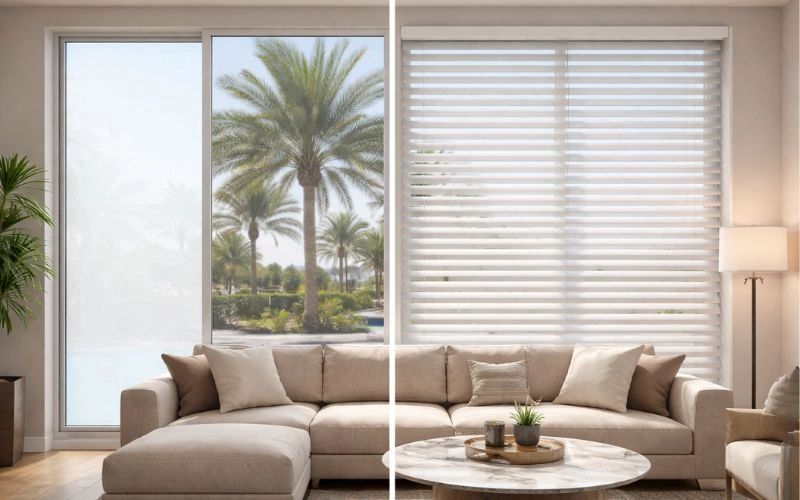
Smart film represents a revolutionary approach to privacy and light control, particularly relevant for Saudi Arabia’s demanding climate. This innovative solution transforms ordinary glass into switchable surfaces that respond to your needs instantly.
How PDLC Smart Film Works
Smart film uses Polymer Dispersed Liquid Crystal (PDLC) technology that allows instant switching between frosted and clear states. When electricity flows through the film, liquid crystal molecules align to create transparency. Switch off the power, and the film returns to its opaque frosted glass appearance, providing immediate privacy. This transformation happens in milliseconds with just a wall switch, remote control, or smartphone app, giving you complete control over your space without physical adjustments.
The technology integrates seamlessly with existing glass through two installation methods. Self-adhesive smart film offers hassle-free application with peel-and-stick functionality, while non-adhesive options use mechanical installation with specialised double-sided tape for secure attachment. Both methods avoid the need for complete window replacement, making upgrades practical and cost-effective.
Key Benefits for the Saudi Climate
Saudi Arabia’s environment creates specific challenges that smart film addresses exceptionally well. The intense sunlight that characterises most of the year requires solutions that manage both light and heat effectively. Premium smart film provides superior UV protection, blocking harmful rays that fade furniture, damage artwork, and contribute to indoor heat buildup. This UV blocking capability preserves interior furnishings while protecting occupants from prolonged sun exposure.
Energy efficiency becomes crucial when air conditioning runs constantly throughout scorching summers. Smart film reduces heat transfer through windows significantly, lowering cooling costs and easing the burden on HVAC systems. The heat-blocking technology incorporated into quality films prevents solar heat gain without sacrificing natural light when transparency is desired. This dual functionality, managing heat while maintaining views, makes smart film particularly valuable in Saudi Arabia, where both concerns are paramount.
Durability matters in harsh desert conditions where temperature extremes and dust challenge conventional solutions. Premium smart film maintains performance for over a decade without degradation, withstanding Saudi Arabia’s climate while requiring minimal maintenance. The sealed film surface doesn’t accumulate dust like mechanical blinds, and cleaning requires only occasional wiping with standard glass cleaners.
Traditional Blinds: The Conventional Approach
Blinds have dominated window treatments for generations, offering familiar functionality and varied design options. However, their performance in Saudi Arabia’s extreme conditions reveals significant limitations that affect both practicality and long-term satisfaction.
Types and Basic Functionality
Various blind styles serve different purposes. Venetian blinds with adjustable horizontal slats allow light angle control, vertical blinds suit wider openings like patio doors, roller blinds provide simple up-down functionality, and roman blinds offer soft fabric aesthetics. Each type requires manual adjustment or motorised mechanisms to change position, meaning you physically interact with them multiple times daily to manage light and privacy.
Material choices include aluminium, wood, faux wood, fabric, and PVC, each with distinct characteristics regarding heat resistance, moisture tolerance, and maintenance requirements. Aluminium blinds withstand heat well but conduct it readily, while fabric options absorb dust and require regular cleaning. Wood and faux wood provide attractive aesthetics but may warp under extreme temperature fluctuations common in Saudi properties.
Challenges in Saudi Conditions
Saudi Arabia’s environment creates specific problems for traditional blinds. Desert dust penetrates buildings constantly, settling on horizontal slat surfaces and accumulating in mechanical components. Cleaning blinds properly requires removing each slat or specialised vacuum attachments, a time-consuming process that many homeowners avoid until buildup becomes visible and unsightly.
Extreme heat affects blind materials significantly. Metal blinds become hot to the touch during peak afternoon sun, potentially causing burns if adjusted without caution. Fabric blinds fade from UV exposure, losing colour and deteriorating over time. Mechanical components, including cords, chains, and tilting mechanisms, wear faster under constant use in dusty conditions, leading to breakdowns that require repair or replacement.
Privacy control with blinds remains limited. Closed blinds block light completely, forcing you to choose between privacy and natural illumination. Partial tilting provides some balance but compromises both privacy and light control. Gaps between slats or around blind edges often allow visibility from certain angles, reducing privacy effectiveness, especially at night when interior lighting makes rooms visible from outside.
Direct Comparison: Smart Film vs Blinds
Evaluating both solutions across critical factors reveals clear advantages for specific Saudi needs. Understanding these differences helps determine which option aligns with your priorities and circumstances.
Climate Performance and Energy Efficiency
Smart film excels in Saudi Arabia’s intense heat through passive and active benefits:
- Consistent UV blocking: Protects interiors regardless of film state (frosted or clear)
- Heat rejection technology: H Advanced films reduce solar heat gain by significant percentages
- No heat absorption: Unlike metal blinds, smart film doesn’t become hot to the touch
- Maintained views: Full transparency option allows natural light without a heat penalty
- Year-round performance: Effectiveness doesn’t diminish with weather or temperature extremes
Blinds provide heat control only when fully closed, blocking beneficial natural light and views simultaneously. Their physical structure means daytime privacy requires sacrificing illumination entirely. Smart film allows rooms to remain bright while maintaining complete privacy, a crucial advantage in Saudi Arabia, where maximising natural light reduces dependence on artificial lighting while managing heat.
Maintenance and Longevity
Maintenance requirements differ dramatically between solutions. Smart film requires minimal upkeep; occasional cleaning with standard glass cleaner maintains clarity and appearance. The film’s smooth surface doesn’t trap dust, and electronic components are sealed and protected. Premium smart film maintains functionality for over a decade without performance degradation, making it a long-term investment that doesn’t require ongoing attention.
Blinds demand regular maintenance, including frequent dusting, deep cleaning of slats, lubricating mechanical parts, and repairing or replacing worn cords and mechanisms. Dust accumulation happens constantly in Saudi conditions, meaning weekly cleaning becomes necessary to maintain appearance. Replacement cycles for blinds typically range from five to ten years, depending on quality and usage, with mechanical failures often occurring sooner.
Aesthetics and Modern Living
Smart film creates sleek, minimalist aesthetics that complement contemporary Saudi architecture. The absence of visible mechanisms, cords, or hardware maintains clean lines and unobstructed views. Glass partitions in modern offices and homes benefit from smart film’s ability to provide privacy without visual clutter. The technology integrates with smart home systems, allowing voice control and automated scheduling that aligns with modern convenience expectations.
Traditional blinds, regardless of quality, introduce visual bulk and mechanical elements that detract from minimalist design philosophies. Cords and chains pose safety risks for children and pets. Even motorised blinds require visible housings and controls that interrupt clean architectural lines. For Saudi properties emphasising luxury and contemporary design, smart film aligns better with aesthetic goals while delivering superior functionality.
Making the Right Choice for Your Saudi Property
Several factors influence which solution suits your specific situation. Consider your property type, budget constraints, and long-term goals when deciding between smart film and blinds.
When Smart Film Makes Sense
Smart film represents the ideal choice for Saudi properties when:
- Modern aesthetics and clean design are priorities
- Energy efficiency and cooling cost reduction matter significantly
- Minimal maintenance appeals to busy lifestyles
- Privacy without sacrificing natural light is desired
- Integration with smart home technology is planned
- Long-term value outweighs higher initial investment
Commercial spaces, including hotels, offices, shopping malls, conference rooms, and clinics, benefit enormously from smart film’s instant privacy control and professional appearance. Residential applications in master bedrooms, bathrooms, and living areas provide luxury convenience that enhances daily life. The technology particularly suits Saudi Arabia’s climate and lifestyle, addressing multiple challenges simultaneously.
Budget and Practical Considerations
Initial costs for smart film exceed traditional blind installations, reflecting the advanced technology and professional installation requirements. However, calculating total ownership costs over ten years often favours smart film when factoring in maintenance time, replacement expenses, and energy savings. Blinds require lower upfront investment but accumulate ongoing costs through cleaning, repairs, and eventual replacement.
Installation complexity differs as well. Smart film requires professional application to ensure proper adhesive bonding and electrical connections, though the process completes quickly without major disruption. Blind installation is simpler but still benefits from professional measurement and mounting to ensure proper fit and operation.
The Verdict for Saudi Arabia
Smart film emerges as the superior choice for Saudi properties when prioritising performance, convenience, and long-term value. The technology addresses Saudi Arabia’s unique environmental challenges while delivering modern functionality that traditional blinds cannot match. Heat management, UV protection, effortless maintenance, and instant privacy control combine to create solutions perfectly suited to the kingdom’s demanding conditions.
While blinds retain relevance for specific applications or budget constraints, the advantages smart film offers, particularly in Saudi Arabia’s harsh climate, make it the clear winner for homes and businesses seeking optimal performance, minimal maintenance, and contemporary aesthetics. As smart film technology becomes more accessible and affordable, it represents the future of window treatments in the kingdom.
Frequently Asked Questions
How much does smart film cost compared to high-quality blinds in Saudi Arabia?
Smart film typically costs more upfront than premium blinds, with prices varying based on glass area and installation complexity. However, smart film’s durability (over 10 years), minimal maintenance, energy savings from reduced cooling costs, and zero replacement expenses often make total ownership costs comparable or lower than blinds over time. Request quotes from providers for accurate pricing specific to your project size.
Can smart film withstand Saudi Arabia’s extreme heat and direct sunlight?
Yes, premium smart film is specifically designed for harsh climates, including Saudi Arabia’s intense heat and sunlight. Quality films maintain performance in extreme temperatures, provide superior UV protection that doesn’t degrade, and include heat-blocking technology that reduces cooling costs. The film’s durability ensures reliable operation for over a decade without performance loss, making it ideal for the Saudi environment.
Is smart film suitable for both homes and offices in Saudi Arabia?
Absolutely. Smart film works excellently in both residential and commercial applications throughout Saudi Arabia. Homes benefit from bedroom and bathroom privacy, energy efficiency, and modern aesthetics. Offices gain instant privacy for meeting rooms, a professional appearance, and confidentiality control. The technology adapts to any space requiring privacy, light control, and heat management, all critical needs in Saudi properties.