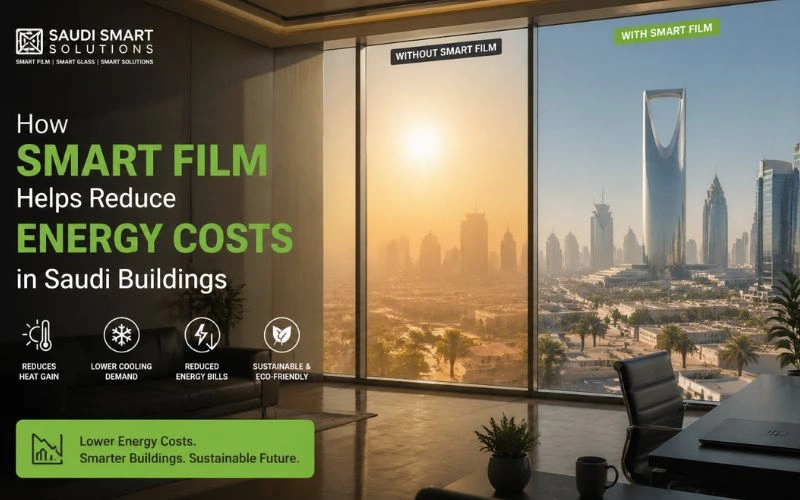
Saudi Arabia ranks among the world’s highest energy-consuming nations per capita, and buildings are at the center of that challenge. With summer temperatures regularly crossing 45°C in cities like Riyadh, Jeddah, and Dammam, air conditioning runs non-stop for months at a time. For homeowners, businesses, and property developers, this translates into electricity bills that strain budgets and eat directly into profits.
According to the Saudi Energy Efficiency Center, buildings account for a large share of Saudi Arabia’s total electricity demand, with cooling systems responsible for the largest share. That figure is not abstract, it represents a real, recurring cost that every property owner across the Kingdom faces every single month.
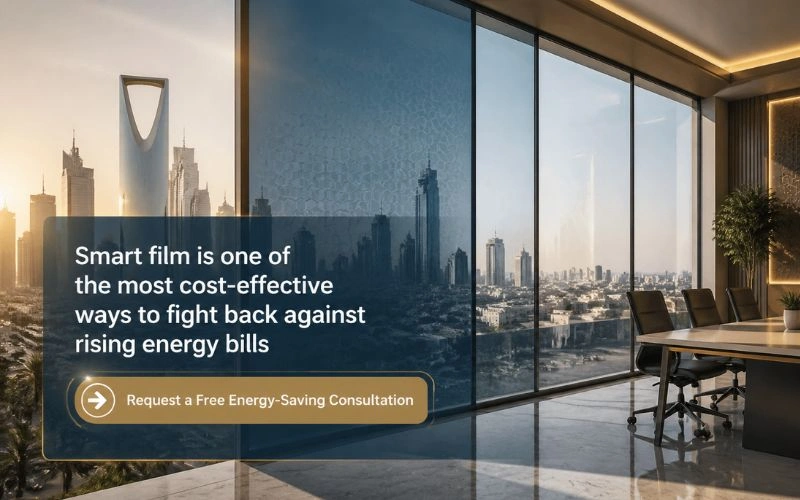
Smart film is one of the most cost-effective ways to fight back against rising energy bills, and the results show up on your very first utility statement.
Most people are surprised to find out that the biggest source of heat entering their building is not the roof or the walls, it is the glass. Standard windows offer almost no resistance to solar radiation, especially in Saudi Arabia’s hot climate, where direct sunlight is intense for the better part of the year. By upgrading glass with smart film, property owners can cut solar heat gain at the source and significantly reduce the load on their cooling systems.
The Hidden Cost of Untreated Glass in Saudi Buildings
Glass is the weakest link in any building’s thermal performance, yet it covers entire facades in modern Saudi architecture.
Why Windows Drive Up Electricity Bills
Every square meter of untreated glass facing the sun acts like a heat collector. Solar radiation passes through the glazing and converts to heat inside the building. This forces air conditioning units to work harder and run longer just to maintain a livable indoor temperature. The International Energy Agency notes that solar heat gain through windows is a major contributor to a building’s total cooling load in hot-climate countries, a factor that is even more pronounced in the Gulf region.
Standard solutions like curtains or window tint offer limited protection. They either block natural light completely or fail to reject enough solar energy to make a meaningful difference on the electricity bill.
What Smart Film Actually Does to Reduce Heat
Smart film is a PDLC (Polymer Dispersed Liquid Crystal) technology applied directly to glass surfaces. When activated, it allows full transparency. When switched to its privacy mode, it becomes opaque, and in both states, it works continuously to filter solar energy.
How the Technology Cuts Cooling Demand
The energy-saving mechanism of smart film works at the glass surface, before heat ever enters the room. High-performance PDLC film is engineered to reflect and absorb solar radiation while still allowing controlled visible light transmission. This means rooms stay brighter and more comfortable without the thermal penalty of unfiltered sunlight.
Smart film also blocks up to 99% of UV rays, protecting both occupants and interior furnishings from long-term sun damage. Less heat entering the building means the AC does not need to run as long or as hard, and that is where the real savings appear.
Key Ways Smart Film Lowers Energy Costs in KSA
Smart film delivers energy savings through multiple overlapping benefits. Each one contributes to a lower monthly electricity bill, and together they create results that compound over time.
Cuts Solar Heat Gain Before It Becomes a Problem
By blocking a significant percentage of incoming solar energy at the glass surface, smart film reduces the thermal load on the building from the moment the sun rises. Rooms facing south or west, which take the hardest hit during afternoon hours, see the most immediate impact in terms of reduced indoor temperatures and a noticeably lighter burden on the AC system.
Reduces Air Conditioning Runtime and Equipment Wear
With heat gain under control, air conditioning systems do not need to cycle as frequently or run at full capacity throughout the day. Lower runtime means lower electricity consumption, reduced wear on compressors and fans, and a longer overall lifespan for HVAC equipment. For commercial buildings with multiple large AC units, this alone can represent thousands of riyals in savings annually.
Keeps Natural Light Without the Greenhouse Effect
One major advantage smart film has over traditional shading solutions is that it does not simply block everything out. When comparing smart film vs blinds, the difference becomes clear: blinds eliminate natural light along with heat, which increases reliance on artificial lighting and adds to overall energy consumption. Smart film filters the heat while preserving daylight, a dual benefit that is especially valuable in office environments where lighting quality directly affects productivity.
Which Buildings Benefit the Most from Smart Film?
Smart film delivers measurable energy savings across a wide range of property types in Saudi Arabia. The buildings that see the strongest return on investment share a few common characteristics: large glass surface areas, extended operating hours, and high cooling demands.
- Commercial office towers with curtain-wall glazing facing direct sunlight
- Residential villas with floor-to-ceiling windows on south or west-facing elevations, especially luxury villas in Riyadh
- Retail showrooms and malls that need visible storefronts without excessive heat buildup, as seen in shopping malls across KSA
- Hotels managing guest comfort across dozens of rooms throughout the day, a pattern covered in how hotels in Saudi Arabia use smart film
- Healthcare facilities where temperature stability is both a comfort and a clinical requirement, discussed further in smart film for hospitals and clinics
- Government and institutional buildings with large open glass lobbies
Each of these environments has significant glazed surface areas, making them ideal candidates for smart film installation with a strong payback potential.
What to Know Before You Install
Smart film is not a one-size-fits-all product. The energy savings you achieve depend on factors like glass type, building orientation, the number of sun-exposed windows, and local electricity tariff rates. Before moving forward, it is worth reviewing the full picture. This detailed guide on before installing smart film covers everything Saudi property owners need to evaluate before committing to a project.
The payback period for smart film in Saudi Arabia can range from a couple of years to several, depending on glass area, building orientation, and local electricity tariffs. After that point, every month represents net savings with no additional investment required. When you factor in the reduction in AC maintenance costs and extended equipment lifespan, the financial case becomes even stronger.
Smart Film Is an Investment, Not an Expense
Rising electricity tariffs across Saudi Arabia mean that doing nothing is no longer a neutral choice. Every month that passes with untreated glass is a month of avoidable energy costs. Smart film transforms a passive expense into a managed one, delivering consistent, measurable savings from the very first billing cycle.
Saudi Smart Solutions installs premium PDLC smart film across Riyadh, Jeddah, Dammam, and all major KSA cities. Every installation comes with professional fitting by certified technicians and a comprehensive 5-year warranty. Whether you are retrofitting a commercial building or upgrading a residential villa, the process is fast, clean, and built to last in Saudi Arabia’s demanding climate.